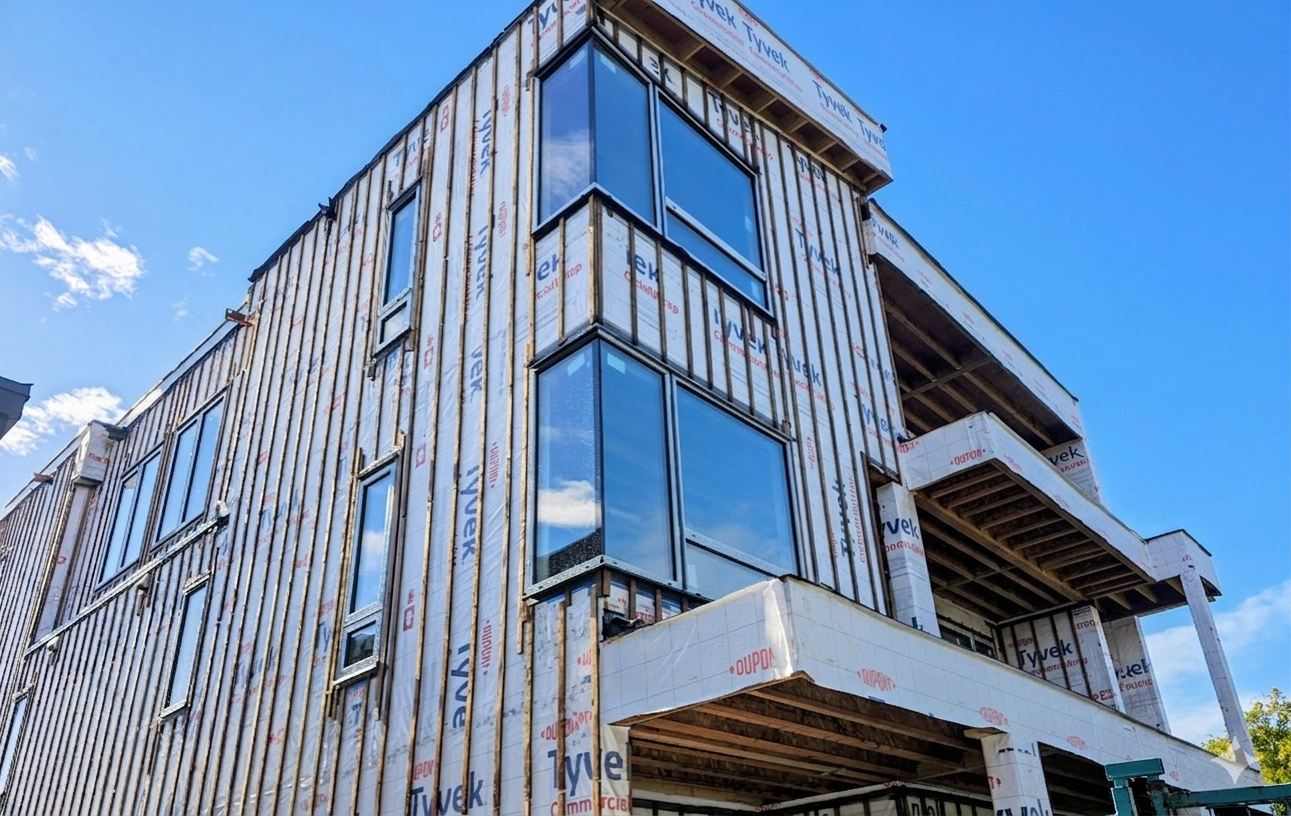
Rainscreen installation helps create a drainage and drying space behind exterior cladding, which is especially important in Vancouver’s wet climate. A properly built rainscreen system helps reduce trapped moisture and supports longer-lasting wall performance.
Why Rainscreen Matters in Vancouver Weather
Rainscreen systems are commonly used behind fiber cement siding, wood siding, metal cladding, and many other exterior finishes. In Vancouver and the Lower Mainland, they are especially common on new construction, larger renovations, and re-cladding projects where long-term moisture management is an important part of the wall assembly.
Benefits of a Rainscreen System
A well-built rainscreen system does more than create an air gap behind the siding. It helps the wall assembly manage moisture more effectively, supports durability, and improves the overall performance of the exterior system.
Better Moisture Control
Rainscreen helps create a drainage space behind the cladding so incidental water can escape instead of staying trapped against the wall assembly.
Improved Drying
The cavity behind the siding allows airflow and drying, which helps the wall system recover more effectively after repeated wet weather.
Longer-Lasting Cladding
By helping manage moisture at the wall assembly, rainscreen can support better long-term performance of siding, trims, and related exterior components.
Reliable Wall Assembly
A properly installed rainscreen system works together with the building wrap, flashings, and cladding to create a more reliable exterior assembly.
Why Choose Affordable Siding for Rainscreen Installation
At Affordable Siding, we install rainscreen systems as part of complete exterior wall assemblies for new construction, renovations, and re-cladding projects. We focus on practical detailing, clean installation, and proper coordination between the building wrap, flashings, fasteners, and cladding so the finished wall system performs the way it should.