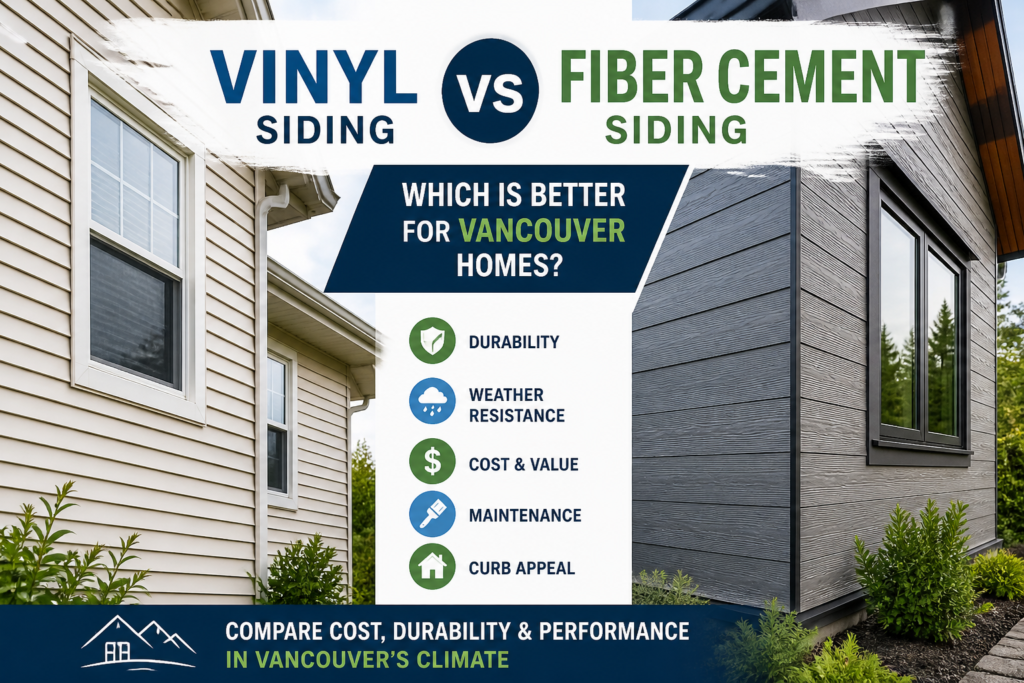
Vinyl vs Fiber Cement Siding: Which Is Better for Vancouver Homes?
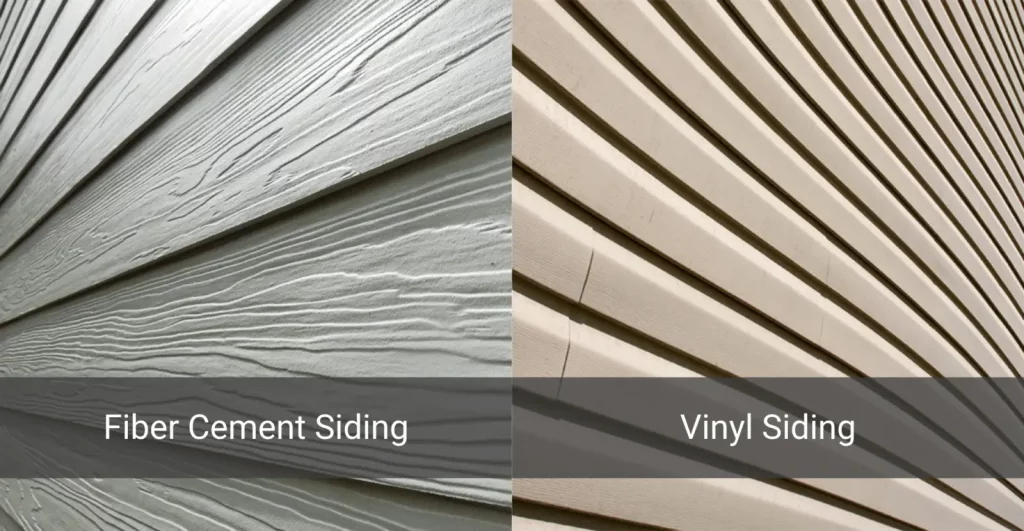
If you live in Vancouver, siding is not just about looks. It’s about survival. Rain, moisture, and temperature swings can destroy the wrong material fast. So choosing between vinyl and fiber cement siding is a big decision. And honestly, most homeowners get confused here. Both options are popular. Both have pros and cons. But they perform very differently in Vancouver’s climate. Let’s break it down in a way that actually helps you decide. Why This Choice Matters in Vancouver Vancouver is not a normal environment for siding. You’re dealing with: This means your siding must do more than just look good. It needs to protect your home long-term and get a professional siding contractor. If you pick the wrong one, you’ll deal with repairs, mold, or even structural damage. What Is Vinyl Siding? Vinyl siding is made from PVC plastic. It’s lightweight, affordable, and widely used across Canada. It’s often the first choice for homeowners on a budget. If you’re exploring options, you can check your local vinyl siding installation services to understand pricing and styles better. What Is Fiber Cement Siding? Fiber cement siding (like Hardie board) is made from a mix of cement, sand, and cellulose fibers. It’s heavier. Stronger. And built to handle tougher conditions. Many homeowners consider it a premium option, especially in wet climates like Vancouver. 1. Durability: Which One Lasts Longer? This is where fiber cement clearly stands out. Vinyl siding: Fiber cement: In Vancouver, durability matters more than anything. If you want something long-term, fiber cement is the safer choice. 2. Moisture Resistance (Very Important in BC) This is the biggest factor most people underestimate. Vinyl siding is not waterproof. Water can get behind it if it’s not installed properly. Over time, that can lead to mold or rot. Fiber cement performs better here. It resists moisture and works well with rainscreen systems. If you’re planning a full exterior upgrade, pairing it with a rainscreen siding system is a smart move. In a rainy city like Vancouver, fiber cement wins this round easily. 3. Cost Comparison Let’s talk numbers. Vinyl siding: Fiber cement: But here’s the real story. Vinyl is cheaper today. Fiber cement is cheaper over time. Why? Because you’ll likely spend more on repairs and maintenance with vinyl. If budget is tight, vinyl works. But if you’re thinking long-term, fiber cement gives better value. 4. Appearance and Curb Appeal This depends on your personal taste. Vinyl siding: Fiber cement: If curb appeal matters to you, fiber cement has a more high-end finish. Many homeowners combine it with modern exterior upgrades to boost property value. 5. Maintenance Requirements No one wants high maintenance. Let’s be real. Vinyl siding: Fiber cement: Vinyl is easier day-to-day. But fiber cement is more reliable long-term. 6. Installation Complexity Installation plays a huge role in performance. Vinyl siding: Fiber cement: If installed poorly, even the best siding will fail. That’s why choosing the right contractor matters. You can explore experienced siding installation services in Vancouver to ensure proper work. 7. Energy Efficiency Neither material is perfect on its own. But: Vinyl siding: Fiber cement: For better efficiency, the whole wall system matters, not just siding. 8. Fire Resistance This is often overlooked. Vinyl siding: Fiber cement: If safety is a concern, fiber cement is a better choice. 9. Lifespan Let’s keep it simple. Vinyl siding: 20–30 years (with maintenance) Fiber cement:30–50+ years (proper installation) This alone explains why many homeowners upgrade to fiber cement. So, Which Is Better for Vancouver Homes? Here’s the honest answer. Choose vinyl siding if: Choose fiber cement siding if: Final Thoughts There’s no “one-size-fits-all” answer. But in Vancouver’s climate, fiber cement has a clear edge. It handles moisture better. It lasts longer. And it gives a more premium finish. That said, vinyl siding still works well when installed properly and maintained. If you’re unsure, the best step is to talk to professionals and compare options based on your home. You can also explore: