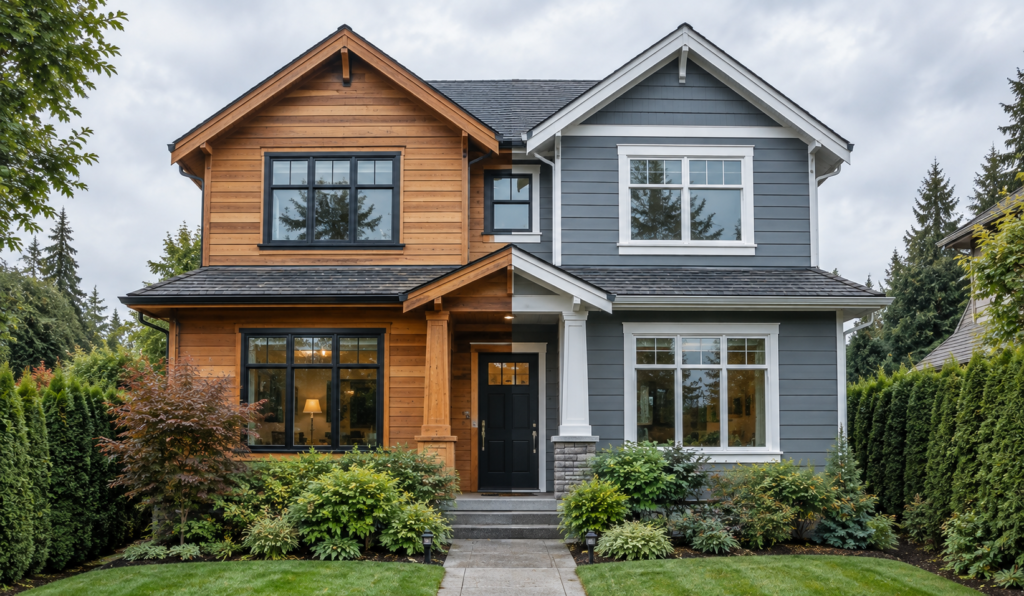
Cedar siding has a long history in British Columbia. Drive through almost any established neighbourhood in Vancouver, North Vancouver, or the Fraser Valley and you will see it on houses that have been standing for forty years. There is a reason it became the default choice for generations of BC homeowners — it looks beautiful, it is locally sourced, and when it is well maintained it ages gracefully in a way that no manufactured product quite replicates.
But the question most homeowners ask today is whether cedar still makes sense in 2026, particularly when James Hardie fibre cement has become the dominant choice for siding replacement projects across the Lower Mainland. Is cedar genuinely worth the higher cost, or are you paying a premium for aesthetics while taking on a material that demands considerably more from you over time?
This guide gives you an honest answer about cedar siding cost.
What Cedar Siding Actually Costs in BC
Cedar is the most expensive mainstream siding option, and its installation requires more preparation, priming, and finishing work than most alternatives, which drives up the time and labour involved. In practical terms for a Vancouver area home in 2026, cedar lap siding installs at $15 to $25 per square foot, with premium grade stock reaching $30 per square foot installed.
For a typical single level home with around 1,800 square feet of exterior wall surface, a full cedar installation lands somewhere between $27,000 and $45,000 depending on the grade of wood, the profile you choose, and the complexity of your home’s exterior.
That is a meaningful number, and it does not include the ongoing cost of keeping cedar in good condition once it is up — which is where the real cost difference between cedar and Hardie becomes clear.
Cedar vs Hardie at a glance: For a typical 1,800 sq. ft. home in Metro Vancouver, cedar installation runs from $27,000 to $45,000. James Hardie fibre cement starts from $16,650 for the same home. The gap between them widens further when you factor in maintenance over the life of the product.
What James Hardie Costs in Comparison
James Hardie fibre cement runs $9 to $13 per square foot installed for standard lap profiles in 2026. On that same 1,800 square foot home, a complete Hardie installation starts from around $16,650 for primed boards, rising to $20,000 and above for pre-finished ColorPlus products where the painting is done at the factory.
If you want a detailed breakdown of what goes into these numbers and what a proper all-inclusive quote should cover, our guide to siding replacement costs in Vancouver covers all the main materials side by side.
The upfront price difference between cedar and Hardie on a typical Lower Mainland home is roughly $10,000 to $25,000. That gap is significant before you have even considered what happens over the next ten, twenty, or thirty years.
The Real Cost Difference Is in Maintenance
This is where the comparison becomes most important, and where a lot of homeowners underestimate what cedar actually requires.
Cedar is a natural wood. In Vancouver’s climate, which delivers nearly 1,200 millimetres of rain per year and months of sustained humidity, natural wood needs regular attention to stay in good condition. Left without maintenance, cedar will grey, check, crack, and eventually rot. The typical maintenance schedule for cedar siding in BC looks like this:
- Cleaning and inspection every one to two years
- Restaining or repainting every four to six years depending on the finish and exposure
- Spot repairs to cracked or damaged boards as they appear
- Recaulking around windows and trim on a similar cycle
A professional restain on a full exterior runs between $4,000 and $8,000 in the Lower Mainland. Over a twenty year period you could reasonably spend $16,000 to $32,000 in maintenance on top of your original installation cost. Add that to the higher upfront price and the total cost of owning cedar siding becomes considerably more than the installation quote suggests.
James Hardie fibre cement, by contrast, needs repainting every 15 to 20 years. Factory ColorPlus finishes push that to 25 years or more before the first repaint is required. For most homeowners that means one or two paint cycles over the life of the product versus five or six restain cycles for cedar in the same period.
How the Two Materials Perform in BC’s Climate
Beyond cost, the performance difference between cedar and Hardie in Vancouver’s specific climate is worth understanding before you make a decision.
Moisture resistance
James Hardie is engineered specifically for climates like ours. Its composition of cement, sand, and cellulose fibres makes it highly resistant to moisture intrusion from rain, humidity, and temperature cycling. For Vancouver homeowners that means a significantly reduced risk of rot, warping, and swelling, which are common outcomes with wood based siding in damp environments.
Cedar does have natural oils that provide some inherent resistance to moisture and insects, which is part of why it worked so well in BC for generations. But those oils diminish over time, particularly as the wood weathers and the finish breaks down. Once the protective layer is compromised, cedar in a Vancouver climate becomes vulnerable relatively quickly. This is also why a proper rainscreen system behind the cladding is non-negotiable for cedar installations in BC — without it, even well maintained cedar will develop moisture problems at the wall level.
Fire resistance
This matters more than many homeowners realise, particularly in areas near the urban wildland interface or in municipalities with stricter fire codes. James Hardie is a non-combustible material. Cedar is wood, and wood burns. Fire resistant fibre cement can reduce home insurance premiums by five to fifteen percent, with some Vancouver homeowners saving several hundred dollars per year after switching from cedar to Hardie. Over a decade those savings become a meaningful part of the overall cost comparison.
Lifespan
James Hardie fibre cement lasts 50 years or more with minimal maintenance. Cedar lasts 25 to 35 years with regular upkeep, and in practice, cedar that has not been consistently maintained will show significant deterioration well before that in a Vancouver climate. Hardie also carries a 30 year manufacturer product warranty that transfers to new owners at resale — something cedar simply cannot offer.
Side by Side Comparison
| Factor | Cedar Siding | James Hardie |
|---|---|---|
| Installed cost (1,800 sq. ft.) | $27,000 to $45,000+ | From $16,650 |
| Maintenance cycle | Restain every 4 to 6 years | Repaint every 15 to 25 years |
| Lifespan in Vancouver | 25 to 35 years with upkeep | 50+ years |
| Moisture resistance | Good when maintained | Excellent, engineered for wet climates |
| Fire resistance | Combustible | Non-combustible |
| Manufacturer warranty | None | 30-year product warranty |
| Aesthetic | Natural warmth, unique grain | Clean, consistent, paintable in any colour |
| Best suited for | Heritage homes, custom builds, design-led projects | Most Vancouver residential homes |
So When Does Cedar Actually Make Sense?
Despite the higher cost and greater maintenance demands, there are situations where cedar is genuinely the right choice and it would be dishonest to suggest otherwise.
If you own a heritage home in a neighbourhood like Shaughnessy, Kerrisdale, or parts of North Vancouver where the architectural character of the street is defined by natural wood, cedar may be the only material that looks right. Replacing cedar with fibre cement on certain homes can feel aesthetically out of place, and in some heritage designated areas it may not even be permitted.
If you are building a custom home and the design specifically calls for the warmth and texture of real wood, no manufactured product fully replicates what cedar delivers. Architects and designers working on high end residential projects in BC still specify cedar regularly for exactly this reason.
If you have the budget, a genuine commitment to the required maintenance schedule, and a specific aesthetic vision that cedar serves, it remains a beautiful and legitimate choice for a BC home.
But for the majority of Lower Mainland homeowners replacing aging siding on a standard residential property, James Hardie fibre cement delivers better long term value, lower lifetime cost, and superior performance in Vancouver’s wet climate. The upfront saving is substantial, the maintenance burden is dramatically lower, and the product is backed by a warranty that follows the home when you eventually sell.
Getting the Right Answer for Your Specific Home
The best material for your home depends on more than just price. The style of your house, the neighbourhood, how long you plan to stay, and what you want the exterior to look like all matter. These are exactly the kinds of questions worth discussing with a contractor who installs both materials and can give you an honest comparison without steering you toward the more expensive option.
Affordable Siding BC installs both cedar and James Hardie across Greater Vancouver and the Lower Mainland. Our crews work directly on every project — no subcontractors — and we back all installations with a five year workmanship warranty. Get in touch for a free on-site quote and an honest conversation about which material makes the most sense for your home.
About Affordable Siding BC: Locally owned and based in Delta, BC, serving Vancouver and the Lower Mainland since day one. Every project is completed by our own experienced crews.