Most homeowners don’t think about their siding… until something goes wrong.
The problem is, by the time you notice damage, it’s often already serious.
In a place like Vancouver, where rain and moisture are constant, siding doesn’t just protect your home. It keeps it alive.
So how do you know when it’s time to replace it?
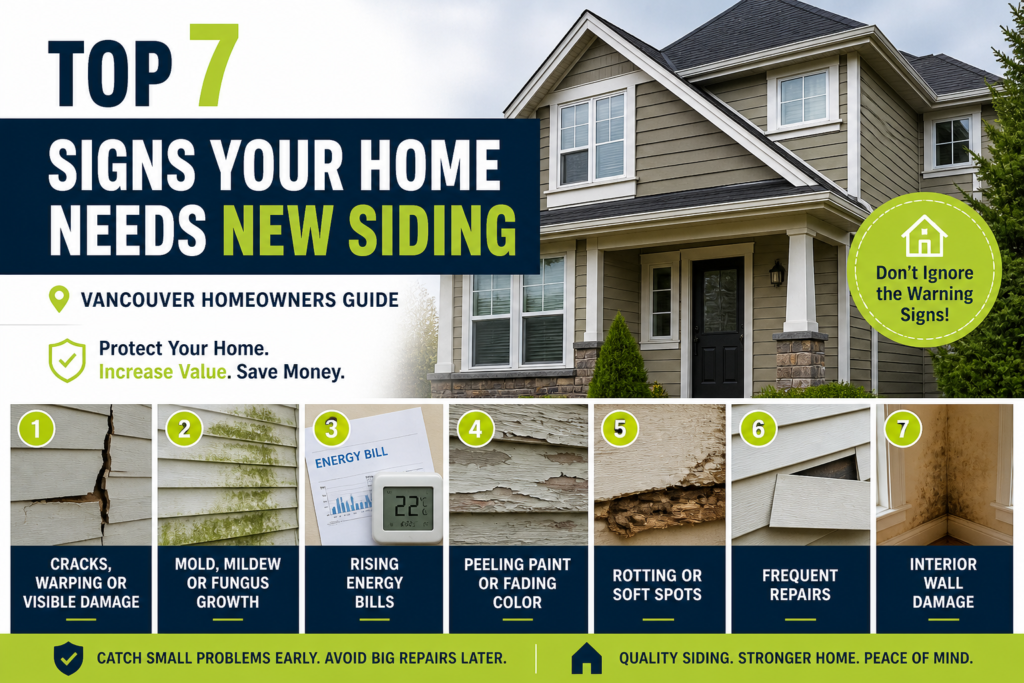
Here are 7 clear signs your home might need new siding.
1. Cracks, Warping, or Visible Damage
Let’s start with the obvious one.
If you see:
- Cracks
- Warped panels
- Holes or dents
Your siding is already failing.
Small damage might not seem like a big deal. But it allows water to get inside. And once moisture gets in, things escalate quickly.
Vinyl siding, in particular, can crack in cold weather or warp under heat.
If the damage is spread across multiple areas, repair won’t be enough. You’ll likely need a full replacement.
This is where upgrading to a more durable option like fiber cement siding can make a big difference.
2. Mold, Mildew, or Fungus Growth
Take a walk around your house and look closely.
Do you see:
- Green patches
- Black stains
- Fuzzy growth near seams
That’s not just dirt.
It’s a sign that moisture is trapped behind your siding.
In Vancouver’s climate, this is very common. But it’s also dangerous.
Mold doesn’t just damage your exterior. It can affect indoor air quality too.
If cleaning doesn’t solve the issue, your siding system may be failing.
In many cases, adding a proper rainscreen system during replacement helps prevent this long-term.
3. Rising Energy Bills
This one surprises a lot of homeowners.
If your heating bills are going up, your siding could be part of the problem.
Old or damaged siding loses its ability to insulate your home.
Air leaks in. Warm air escapes. And your system works harder to keep up.
You might not see the damage. But you’ll feel it on your energy bill.
Replacing siding, especially with insulated options, can improve efficiency significantly.
If you’re planning a project, consider combining it with a full siding installation upgrade for better performance.
4. Peeling Paint or Fading Color
Paint shouldn’t peel after just a few years.
If your siding:
- Needs repainting often
- Looks faded or worn
- Loses color unevenly
It’s a sign the material underneath is weakening.
Good siding should hold its appearance for years.
Constant repainting is not just annoying. It’s expensive.
Fiber cement siding, for example, holds paint much longer than traditional materials.
So instead of repainting every few years, you invest once and move on.
5. Rotting or Soft Spots
This is a serious red flag.
If you press on your siding and it feels:
- Soft
- Spongy
- Weak
You’re likely dealing with rot.
This happens when water gets trapped and sits behind the siding over time.
Wood siding is especially vulnerable. But other materials can be affected too if moisture builds up.
At this point, it’s not just about appearance.
Rot can spread into your home’s structure.
And once that happens, repair costs go way up.
Replacing your siding early can prevent much bigger problems later.
6. Frequent Repairs
Be honest.
How often are you fixing your siding?
If it feels like:
- A new crack every season
- Constant patchwork
- Repeated small fixes
You’re probably spending more on repairs than you should.
At some point, repairing stops making sense.
Replacing your siding might seem expensive upfront. But it saves money long-term.
Plus, you get peace of mind knowing your home is protected.
If you’re considering options, looking into durable materials like metal siding solutions can reduce future maintenance.
7. Interior Wall Damage
This is the sign most people ignore.
Look inside your home.
Do you notice:
- Peeling paint
- Water stains
- Bubbling walls
These are often caused by moisture getting through your siding.
By the time you see interior damage, the problem has already gone deep.
This is why siding is more than just an exterior feature.
It’s part of your home’s protection system.
Ignoring this can lead to mold, insulation damage, and even structural issues.
Should You Repair or Replace?
Not every issue means full replacement.
Here’s a simple way to decide:
👉 Repair if:
- Damage is small and isolated
- Siding is still relatively new
- No moisture issues
👉 Replace if:
- Damage is widespread
- You see mold or rot
- Repairs keep happening
In Vancouver’s climate, replacing early is often the smarter choice.
Why Timing Matters
Waiting too long can cost you more.
What starts as a small crack can turn into:
- Water damage
- Mold growth
- Structural repairs
And those costs add up fast.
If you’re already seeing 2–3 of these signs, it’s time to seriously consider replacement.
Final Thoughts
Your siding does more than make your home look good.
It protects everything inside.
In a city like Vancouver, where moisture is always present, strong siding is not optional. It’s essential.
If your home is showing these signs, don’t ignore them.
The sooner you act, the more you save.